

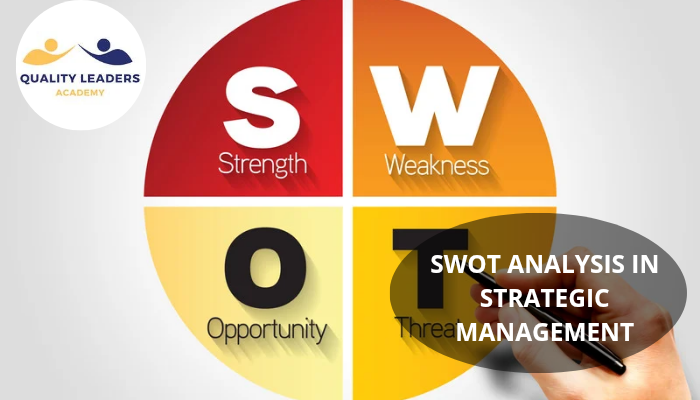
When healthcare organizations embark on strategic change, conducting a robust SWOT analysis in strategic management in healthcare provides a practical framework for assessing internal capabilities and external conditions. By clearly identifying Strengths, Weaknesses, Opportunities, and Threats, health-system leaders can make informed decisions that support quality care and operational resilience.
UNDERSTANDING SWOT ANALYSIS AND ITS RELEVANCE IN HEALTHCARE

What is SWOT analysis? The SWOT framework outlines four key dimensions that shape organizational analysis: internal strengths and weaknesses, as well as external opportunities and threats. It is a management tool designed to map out internal factors (strengths and weaknesses) and external factors (opportunities and threats) that impact an organization.
WHY APPLY SWOT IN HEALTHCARE?
Healthcare institutions face unique challenges: regulatory shifts, evolving patient needs, technological innovation, and constrained resources. Applying a SWOT framework allows such organizations to systematically review their internal conditions (e.g., staff expertise, infrastructure) and external environment (e.g., market trends, policy changes) to shape strategic plans. For example, a literature review found the tool effective as a “strategic planning and management technique in the health care industry” that supports improvement cycles.
KEY ELEMENTS OF SWOT IN STRATEGIC MANAGEMENT IN HEALTHCARE
Now, what are the key elements to apply SWOT analysis? Here is a full explanation.
Strengths (Internal)
These are internal attributes that give the organization a competitive or operational advantage. In a hospital context, examples of strength might include a strong specialist team, advanced diagnostic technology, or a solid reputation for quality. For instance, one source lists “a new and/or innovative service” and “superior location or geographic advantage” as strengths in a healthcare context.
Weaknesses (Internal)
Weaknesses are internal limitations or gaps that inhibit performance. Examples include outdated equipment, staff shortages, or inefficient processes. One study reported that in pediatric anaesthesia, “lack of clinical protocols” emerged as a critical weakness that needed strategic action.
Opportunities (External)
Opportunities are external factors that the organization can exploit to its advantage. In healthcare, these may include demographic shifts (aging population), new reimbursement models, telehealth expansion, or regulatory relaxation. For example: “availability of new technology,” “changes in population profile or need.”
Threats (External)
Threats are external events or conditions that could jeopardize the organization’s success. For healthcare, these might include regulatory cuts, new competitors, pandemics, or rapid technological disruption. One study identified threats such as “rapid change of managers in the health system” and “lack of data” when developing health technology assessment frameworks.
IMPLEMENTING SWOT ANALYSIS IN STRATEGIC MANAGEMENT IN HEALTHCARE
Step 1: Data Gathering
Begin by compiling key internal metrics (clinical outcomes, operational efficiency, workforce competency) and external intelligence (policy trends, technological advances, regional demand). Using rigorous data rather than anecdote is essential.
Step 2: Constructing the SWOT Matrix
Frame your findings in a matrix: two rows (Internal, External) and two columns (Helpful, Harmful). This layout clarifies relationships among items.
Step 3: Translating to Strategy
Use the matrix to derive strategic options:
- Leverage Strengths to exploit Opportunities (SO strategy)
- Use Strengths to defend against Threats (ST strategy)
- Address Weaknesses by seizing Opportunities (WO strategy)
- Mitigate Weaknesses and guard against Threats (WT strategy)
A literature review in the healthcare context emphasizes that SWOT helps “identify all the characteristics in the organization to start the process of improvement.”
Step 4: Action & Monitoring
Translate strategies into actionable plans with responsible owners, timeframes, and key performance indicators. Regularly revisit the SWOT as environments shift, especially in dynamic healthcare markets. One guide recommends reassessing at least annually, preferably twice.
BENEFITS AND LIMITATIONS OF SWOT ANALYSIS IN STRATEGIC MANAGEMENT IN HEALTHCARE
Let’s talk about the benefits and limitations of SWOT analysis in strategic management.
Benefits
- Holistic view of internal and external factors: Empowers a health organization to see not just what’s going on inside but how the broader system is evolving.
- Simplicity and flexibility: The framework is straightforward to understand and apply across units. One article notes its popularity in the health sector for these reasons.
- Foundation for strategy: By mapping strengths/weaknesses with opportunities/threats, organizations can create balanced strategic plans aligned with realities.
Limitations
- Surface‐level capture: If done superficially, SWOT may miss deeper root causes or interdependencies. One article pointed out the deficient use of weighting, scoring, and vector analysis in past healthcare applications.
- Static snapshot: As environments change (technologies shift, regulations evolve), a static SWOT becomes outdated unless periodically revisited.
- Reliance on subjectivity: While data helps, many SWOT exercises rely on judgments that may be bias-prone. Ensuring diversity of stakeholder input is key.
PRACTICAL EXAMPLE: APPLYING SWOT IN A HOSPITAL SETTING
Imagine a mid-sized regional hospital seeking to expand its services. An effective SWOT analysis in strategic management in healthcare might reveal:
- Strength: A highly rated cardiac surgery program and an experienced cardiology team.
- Weakness: Limited outpatient digital infrastructure and long wait times.
- Opportunity: Regional growth in demand for tele-cardiology and remote monitoring services.
- Threat: New entrant hospital in the adjacent region offering lower-cost cardiac care rental models.
From the matrix, strategic options could include: - SO: Leverage the strong cardiac team to launch tele-cardiology outreach, capturing growth.
- WO: Address the digital infrastructure weakness by investing in telehealth, enabling service expansion.
- ST: Use reputation strength to differentiate from the low-cost competitor, focusing on quality and outcomes.
- WT: Prioritize process improvement to shorten wait times, reducing the risk of losing referrals to the new entrant.
This demonstrates how the SWOT framework directly supports strategic choices grounded in internal and external realities.
The SWOT analysis in strategic management in healthcare is a powerful and accessible tool for healthcare leaders who aim to align institutional capabilities with environmental conditions. By systematically assessing internal strengths and weaknesses alongside external opportunities and threats, healthcare organizations can build strategic plans that are both realistic and forward-looking. While the tool is not without limitations, when used rigorously and revisited regularly, it offers a clear pathway for decision-making and continuous improvement.
If you want to be one of the healthcare leaders capable of transforming strategy into measurable results, consider joining the Advanced Strategic Management in Healthcare course by Quality Leaders Academy.
This accredited 50-hour program provides an in-depth understanding of tools like SWOT, PESTLE, and balanced scorecards, tailored specifically for the healthcare sector. Through interactive, bilingual instruction and real-world case studies, you’ll gain the skills to design, implement, and sustain strategic initiatives that elevate your organization’s performance.
Read also:
ARTIFICIAL INTELLIGENCE AND DECISION SUPPORT IN HEALTHCARE
Resources:
https://biomedres.us/pdfs/BJSTR.MS.ID.006419.pdf
https://www.clearpointstrategy.com/blog/swot-analysis-in-healthcare